There have been multiple stages of identity shifts since I arrived in the U.S. with my family at age 12.
Beginning Stage — Culture Shock (Ages 12–17)
Disliked the language; didn’t feel like learning; didn’t feel like I belonged; became a loner; homesick.
I remember hating this place so much.
I remember thinking:
I didn’t choose to be here. It was my parents who decided to move us to the States. I don’t even like English. I don’t understand anything at school. I can’t have normal conversations with my peers. I barely understand any of my assignments. The teachers don’t even understand how hard it is for me to finish a simple reading comprehension assignment or participate in a lab discussion.
They tell me I can ask for extra help, but I need extra help with every single question on the assignments. It’s exhausting. I don’t even feel like asking for help anymore. I feel stupid and helpless.
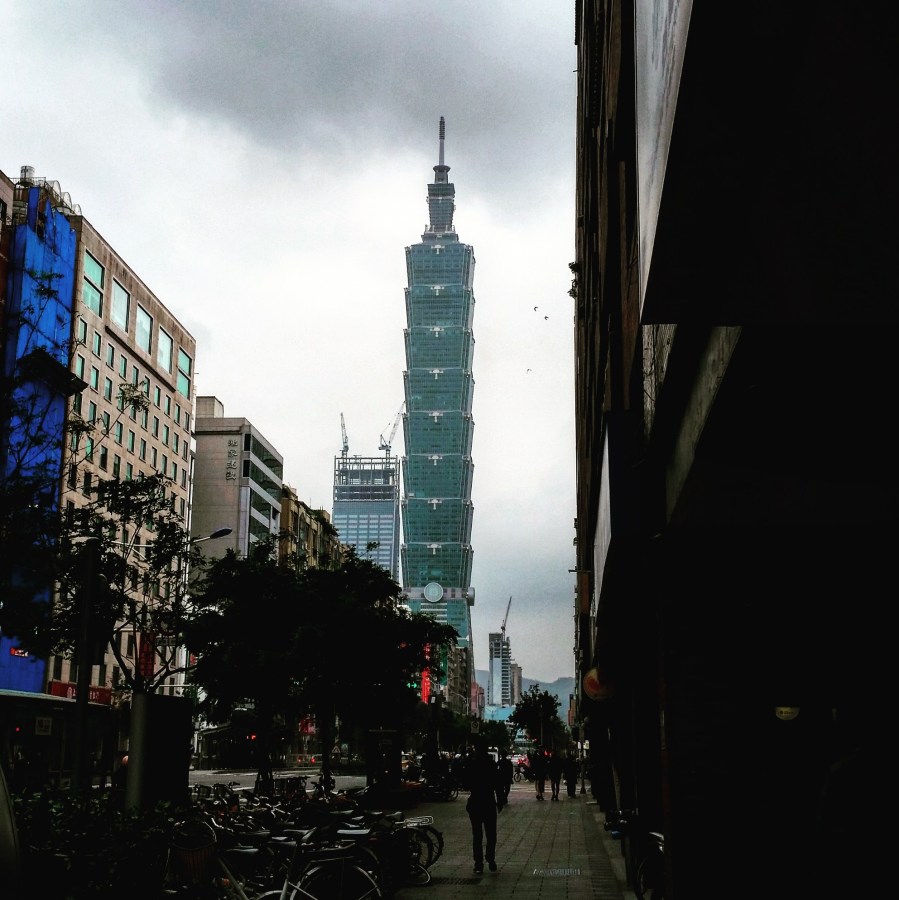
I just want to go back to Taiwan. I want to be able to hang out with my friends again. I miss everything about Taiwan. I miss our old house. I miss my old room. I miss the food. I miss the city lights of Taipei.
Stage 2 — Isolation (Ages 18–21)
Almost didn’t have any English-speaking friends.
I started college in a city that was much more diverse than the one where I had gone to middle school and high school. I started meeting people who shared my native language, and I began hanging out with them all the time.
It felt like I had finally found my comfort zone, and I didn’t want to leave my bubble.
The only time I really needed to speak English was during class. I wasn’t building much confidence in my ability to speak or write in English, but honestly, I didn’t care. At that point, I just wanted to “belong.”
And hanging out with friends who also spoke Mandarin gave me something I had been missing for a long time: a sense of belonging.
Stage 3 — Identity Shift: Reverse Culture Shock (Ages 22–25)
I graduated from college without having much confidence in my English ability. I didn’t think I was capable of finding a decent job at an American company. I worried that my shyness, along with my not-so-great English reading and writing skills, would get in the way.
It seemed easier to find a job in Taiwan, where English speakers were generally well regarded. People wouldn’t necessarily know that I didn’t speak perfect English. With that in mind, I moved back to Taiwan and found my first job as an EFL teacher. They were always hiring English teachers.
I was actually pretty hesitant when a recruiter first approached me about an EFL teaching position. I didn’t really think I was competent enough to teach. But surprisingly, after a couple of months, I started enjoying it more and more.
I began to realize that I was much more competent than I had ever given myself credit for.
I was able to connect with my students’ experiences in a way that many of the “foreign teachers”—what native English-speaking teachers are often called in Taiwan—couldn’t. I had lived through the experience of being a language learner myself. I knew why certain vocabulary or sentence structures could be confusing. I knew how to translate and explain things in ways that made sense from a learner’s perspective.
For the first time, I started seeing my own experience of struggling with English as something that gave me an advantage rather than something I needed to be ashamed of.
But living in Taiwan also brought something I hadn’t expected: reverse culture shock.
I noticed that people seemed to give you more respect when they perceived you as a foreigner. But to them, I didn’t look foreign. I looked Taiwanese or Chinese.
In the U.S., being bilingual had felt like an advantage. In Taiwan, I felt like people cared less about the fact that I was bilingual and more about whether I was perceived as a foreigner. Sometimes, it even felt like being seen as an ABC—an American-born Chinese person who didn’t speak much Chinese—would have earned me more recognition than simply being Taiwanese-American and bilingual.
I started “rebranding” myself. I experimented with a more “ABC-like” appearance and sometimes even pretended that my Chinese was worse than it actually was, or that I didn’t speak Chinese at all.
I also started becoming increasingly uncomfortable with certain cultural attitudes and values around me. From my perspective, there was sometimes an overwhelming admiration for Western culture, along with a tendency to view life in the U.S. as automatically better. People would ask me things like, “Why did you come back to Taiwan? Isn’t it nice in the U.S.? You should have stayed there. There must be so many more opportunities for you.”
When I complained about what I saw as unequal treatment in English-teaching pay, particularly the difference between local and foreign teachers, people would sometimes respond with, “Then don’t teach English, just go find a different type of job.” rather than engaging with the issue I was trying to raise.
Slowly, I began waiting for an opportunity to move back to the States. I didn’t want to keep living somewhere where I no longer felt that I belonged.
I had spent my childhood trying to fit into America. Then I spent my early adulthood trying to find belonging in Taiwan. And now, unexpectedly, I found myself missing America.
I no longer felt entirely “Taiwanese.”
I wanted to be American—not simply because I had lived there, but because that was where I had grown up. It was where I had spent my adolescence, learned how to navigate the world, and developed many of the values that had come to shape who I was.
Stage 4 — Identity Shift: Assimilation (Ages 26–29)
I moved back to the States and resided in the Bay Area, California.
I would usually tell people that I “grew up in North Carolina” and simply let them assume that I had never lived in Taiwan as a child. At the time, I believed that in order to become completely fluent and competent in a language, you had to completely assimilate.
I became incredibly hard on myself. I would get mad whenever I made a grammatical mistake in English, or whenever a native speaker didn’t understand me when I tried to pronounce a word I wasn’t familiar with.
I started questioning myself and even hating myself for spending so much of my adolescence and college years isolating myself and mostly hanging out with Chinese-speaking friends. My best friend in high school was Chinese, and I pretty much only hung out with her. In college, I had done much of the same thing.
I started looking down on other 1.5-generation immigrants who had made similar choices. I criticized them for not assimilating, telling myself that this was why they still lacked confidence in their language ability even as adults.
In some ways, I still believe there is some truth to that. Immersion and actually using a language in everyday life can make a huge difference. But I also realize now that I didn’t have to be so harsh—not toward myself, and certainly not toward people who had gone through something similar.
It really is difficult to acculturate when you already have a language and a culture that feel familiar and comfortable. When your L1 is the language you associate with home, family, friendship, and the person you were before you moved, there is a natural pull toward it.
Back then, I saw assimilation as something I had failed to do.
Now, I see it as something much more complicated.
Stage 5 — Identity Shift: Acculturation / Integration (Age 30–Now)
I’m more at peace with my mixed and hybrid identity now.
I no longer “refuse” to be seen as Taiwanese. I no longer beat myself up whenever I make a mistake in English because, hey—“I’m sorry I made a mistake in my third language?”
I’ve learned to embrace my identity.
Even though I don’t see myself living in Taiwan again in the future, Taiwan is still part of who I am. It’s where I’m from. I may not agree with all of the values there, and I may not act or think like everyone else. But I don’t have to hate a place simply because I don’t agree with everything about it.
There are going to be both positive and negative aspects to every culture. I’ve learned to keep an open mind toward different ways of thinking, different values, and different ways of understanding the world. I can respect them without feeling like I need to change who I am to accommodate them.
I can also acculturate selectively. I can adapt to the things that make sense to me and that are appropriate for the environment I’m in, depending on where I am or where I go. I don’t have to choose one culture over another.
And I think that is where my strength lies.
It no longer matters as much to me what people see me as. Taiwanese? American? Taiwanese-American? Chinese? Asian American? I don’t feel the need to prove any particular answer anymore.
As for my fellow 1.5-generation immigrant peers, I see now that many of us have struggled with identity issues, both growing up and well into adulthood. Some people are better at navigating it than others.
I just wish everyone didn’t have to go through such a long and painful journey of figuring out who they are. It can take a real toll on your mental health.
Perhaps segmented acculturation is the way forward. Not choosing one culture over another, but taking what works for you from each one, while still remaining yourself.
And I just hope that everyone else can eventually find that same sense of peace.


